It is 11 p.m. The lights are off, the phone is finally down, and you slide under the blanket only to feel a familiar texture around your toes: you are still wearing the socks that left the house with you this morning. They sat through the commute, the office carpet, a gym session and fourteen hours of ordinary life. Now a small decision stands between you and sleep — pull them off, or leave them on?
Here is the conclusion up front: the pair you wore during the day should come off every single night, and that part is not negotiable. Whether your feet then need a second, clean, loose pair for sleeping is a separate question, and the honest answer depends on your room temperature, your circulation and how your skin behaves. This article walks through what actually builds up inside a sock over one day, what happens when that sock stays on until morning, when sleeping in socks genuinely helps, and how to choose a night pair that does its job without squeezing, overheating or irritating your feet.
The Short Answer: Remove the Day Pair, Then Decide About a Night Pair
Socks do two jobs while you are awake: they cushion your feet against shoes and floors, and they absorb what your feet give off — sweat, salts and shed skin cells. By bedtime, a worn pair has reached the end of its design life. It is slightly damp, its fibers are loaded, and its cuff has been pressing the same ring of skin for twelve or more hours. Your skin now needs the opposite treatment: air, dryness and freedom of movement.
That is why the honest answer to this question has two parts. The first part is universal: the day's pair comes off, because leaving it on does not protect anything — it seals moisture and microbes against the skin and keeps pressure on the ankle for another eight hours. The second part is personal: whether your feet then need a fresh pair depends on your bedroom, your circulation and your own habits, and the sections below give you the criteria to decide.
Quick answer
Remove the socks you wore today — every night. If your feet run cold afterwards, change into a fresh, loose, breathable pair kept only for sleeping. What troubles feet overnight is rarely the presence of a sock; it is a sock that is dirty, damp, or tight enough to leave a ring on the skin.
The rest of this guide covers the numbers behind that rule, the research on warm feet and falling asleep, a decision table for common situations, how to choose a night pair that actually helps, and the cases — babies, diabetes, Raynaud's syndrome — where the default advice changes.
What Builds Up Inside a Sock Over One Day
Your feet are among the sweatiest parts of the body. Dermatology references commonly put the count at around 250,000 sweat glands across both feet, and under warm conditions they can release roughly half a pint — about 240 milliliters — of moisture in a single day. Inside a shoe, most of that moisture has nowhere to go except into the yarn of your socks.
250,000sweat glands packed into both feet
240 mlmoisture feet can release on a warm day
12-16 ha typical pair is worn before bedtime
Follow that moisture through a normal day. In the morning the sock is dry and the elastic is firm. By afternoon, the fibers have absorbed salt water, skin flakes and oils, and the temperature inside your shoe has created a private, humid microclimate. Warmth plus dampness is precisely the environment that odor-causing bacteria and the fungi responsible for athlete's foot prefer — the familiar smell of a worn sock is bacteria metabolizing the compounds in your sweat. None of this is dramatic on any single day. It is the routine of it — the same pair, day after day, never given a night off — that turns an ordinary sock into a skin problem.
There is a second, quieter issue: the skin itself. The skin on your feet, like skin anywhere, does better with periodic air exposure. Covering it with a damp textile for twenty hours a day keeps the outer layer soft, macerated and more prone to cracking, itching and infection. Taking socks off at night is the one reliable window your feet get to dry out completely, and skipping that window night after night removes the recovery time entirely.
For people who already deal with foot odor or recurring fungal irritation, this single habit — a nightly air break — often does more than any spray or powder, because it attacks the condition those products are fighting: constant moisture held against the skin.
Circulation and Cuff Marks: When Tight Socks Really Must Come Off
Look at your ankles after a long day in socks. If you can see a shallow groove where the cuff sat, the elastic has been pressing into your skin for hours. Feet and ankles naturally swell somewhat during the day as fluid settles downward, so a cuff that felt fine at 7 a.m. can be genuinely tight by 10 p.m. Wearing that same cuff to bed applies pressure to already-swollen tissue for another eight hours with no walking, flexing or shifting to relieve it.
For most healthy people, a faint sock mark that fades within half an hour is harmless. The warning signs run deeper: dents that persist well past thirty minutes, numbness or pins and needles, feet that stay cold because blood flow is being pinched at the ankle. Anyone with diabetes, peripheral artery disease, varicose veins or pregnancy-related swelling should treat tight cuffs more seriously, because compromised circulation reacts to sustained pressure far less forgivingly.
A practical test takes two seconds: slide one finger under the cuff. If it will not go, or if the sock leaves a ring you can see across the room, that pair is finished for the day — and it should not become your night sock either. This is also why loose-top construction matters so much in socks designed for extended wear. Manufacturers who make socks for overnight and medical use spend an unusual amount of engineering effort on cuff elasticity for exactly this reason.
For readers whose feet swell, whose skin is fragile, or who simply cannot tolerate elastic pressure, socks designed with non-binding, loose-knit cuffs — such as the styles developed for diabetic and sensitive feet — remove the pressure problem at the source instead of asking you to manage it every evening.
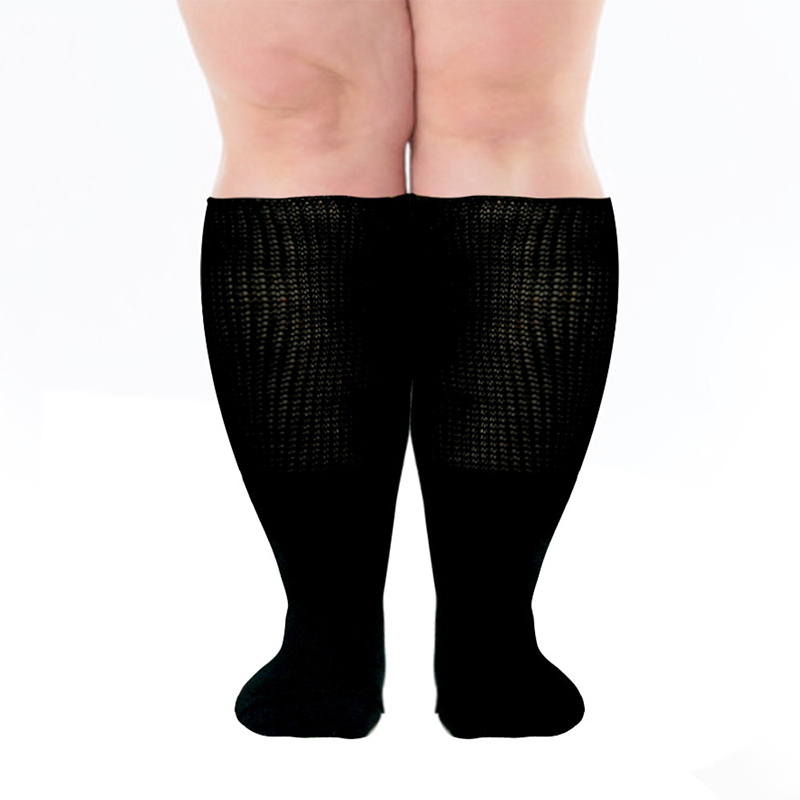 Non-Binding Diabetic Socks for Swollen and Sensitive FeetDesigned with loose, pressure-free cuffs for diabetic, larger, or sensitive feet, these socks suit readers who cannot tolerate elastic pressure, letting warm feet support natural nighttime heat loss comfortably.View Product →
Warm Feet, Faster Sleep: What the Research Actually Shows
Here is where the topic gets interesting, because there is real physiology behind the old advice to warm your feet before bed. To fall asleep, your core body temperature needs to drop by roughly half a degree to a full degree Celsius. Your body triggers that drop by widening the blood vessels in your hands and feet — a process called distal vasodilation — which releases heat through the skin. Cold feet are, quite literally, closed gates: constricted vessels that cannot dump heat, and therefore a body that takes longer to reach the temperature profile of sleep.
Warm feet open those gates. A 2018 study published in the Journal of Physiological Anthropology tested this with young men sleeping in a 23°C room and reported that participants wearing socks fell asleep about 7.5 minutes faster, slept about 32 minutes longer, and woke up roughly half as often during the night.
What the 2018 socks-and-sleep study measured
Faster sleep onset: 7.5 minutes
Longer total sleep: about 32 minutes
Fewer night awakenings: roughly half
Source: Journal of Physiological Anthropology, 2018. Small study group, 23°C room; individual results vary.
Read those numbers carefully, though, because the useful conclusion is not "socks are magic". The effect comes from warm skin, and socks are only one way to get there. A ten-minute warm footbath before bed produces much of the same vasodilation and then leaves your feet free. So does a hot water bottle placed at the foot of the bed for the first half hour. If your bedroom sits in the widely recommended range for sleep and your feet feel comfortable, you may need nothing on them at all.
Numbers worth knowing
Most sleep guidance places the ideal bedroom at roughly 16 to 20°C (61 to 68°F). Feet do not need to be hot; they need to be warm enough for the vessels to stay open. The difference between a comfortably warm sock and a heavy one matters more than most people expect.
For people whose feet stay stubbornly cold — poorly insulated bedrooms, winter months, cold-sensitive circulation — a light, loose pair worn for sleeping is a reasonable and evidence-supported choice. The key word is loose, and the second key word is dry: a sock that traps sweat defeats its own purpose, because damp skin loses heat faster. Double-layer thermal knits exist precisely for this problem, separating a moisture-moving inner layer from an insulating outer layer, and the construction details behind that are covered further below.
If you want the deeper mechanics of that construction, we explain in a separate article how double-layer thermal socks keep your feet dry through the night, layer by layer.
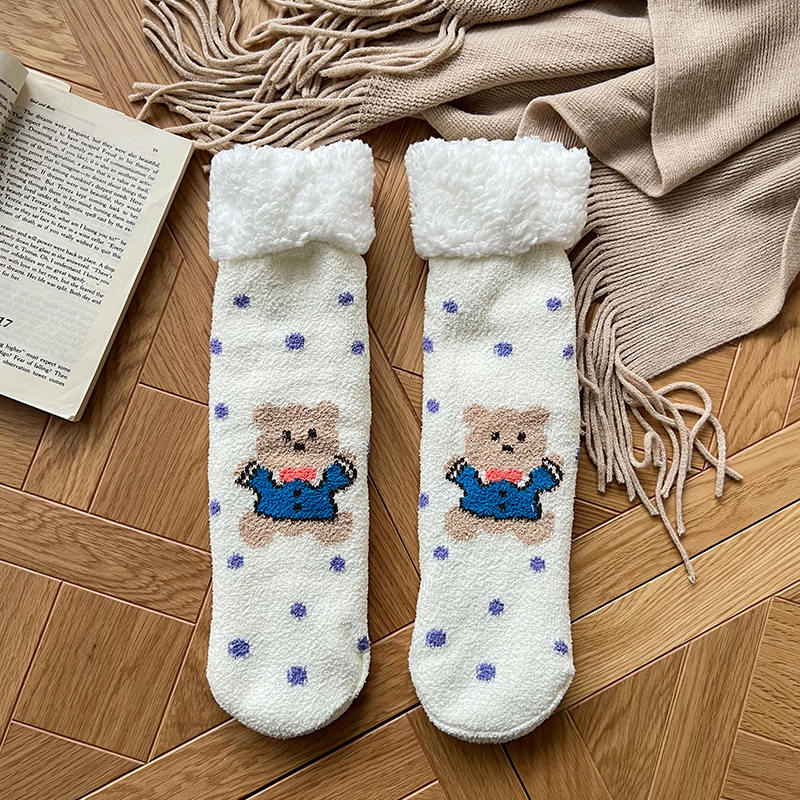 Double-Layer Thermal Socks for Warm, Dry Feet at NightWith a snug inner layer and protective outer layer, these thermal socks cushion, reduce friction, and wick moisture, making them a practical clean night pair for cold-bedroom sleepers.View Product →
Remove or Keep On? A Decision Table for Common Situations
Rules get fuzzy in real life, so the table below compresses the guidance above into situations people actually meet on a Tuesday night. When in doubt, the day pair always comes off; the only real question is whether a clean night pair goes on afterwards.
Table 1. Night-by-night decisions for common situations. Any chosen night pair should still pass the loose-cuff test.
| Your situation tonight |
Better choice |
Why |
| Still wearing the socks from this morning |
Take them off |
Hours of sweat, skin flakes and bacteria are sealed against the skin; feet need air |
| Bedroom around or below 18°C and feet run cold |
Fresh loose pair, wool if available |
Warm feet support the natural temperature drop that starts sleep |
| The cuff left a clear groove on your ankle |
Off now; loosen tomorrow's pair |
Sustained pressure on already-swollen tissue restricts circulation |
| Feet feel damp, itchy or smelly |
Off, wash, dry fully |
Odor bacteria and fungi need moisture; dry skin breaks their cycle |
| You are applying medicated foot cream |
Bare feet, or a thin clean cotton pair over the cream |
Gentle cover helps the cream work; the sock must be loose and freshly washed |
| Baby under 12 months |
Usually no socks; adjust sleepwear instead |
Overheating is the risk to manage, and feet are poor warmth indicators |
| Raynaud's syndrome or chronically icy feet |
Fresh pair, warmed before bed |
Gentle warmth reduces the chance of a night-time attack |
| Fever, hot flushes or a warm night |
Everything off |
The body needs to release heat in order to fall and stay asleep |
How to Wear Socks at Night the Right Way
If your feet need warmth, sleeping in socks is not a bad habit to be cured — it is a legitimate tool with a short list of conditions. Get these right and the practice is comfortable and safe; miss them and you get the sweaty, marked-up feet that give night socks their bad reputation.
The Fresh-Pair Rule
A night sock must be a sock that has not been worn that day. This single rule eliminates most of the hygiene concerns around sleeping in socks, because the problems everyone warns about — bacteria, odor, fungal growth — live in the pair that already worked a full shift. Keep two or three pairs designated only for sleeping, rotate them, and wash them after every single wear. The "just five more minutes" re-sock in today's pair is the habit to retire; five minutes is long enough to re-dampen clean feet and undo the air break you just gave them.
Fit: The One-Finger Cuff Test
Slide one finger under the cuff of the pair you plan to sleep in. It should glide through with light resistance and no struggle. If the sock needs to be stretched to admit a fingertip, size up or switch to a loose-top style. At night you also want a smooth or seamless toe closure, because a toe seam that goes unnoticed during the day can rub the same spot for hours. Heavy arch-support bands belong in daytime sports pairs, not bed pairs; at night, neutral and relaxed wins.
Choosing the Fiber
Fiber determines how the sock handles the moisture your feet keep releasing overnight, and this is where night socks differ most from fashion socks. The comparison below reflects what we see repeatedly in production and wear testing.
Table 2. Common sock fibers compared for overnight wear. Blends combine traits of both parent fibers, so check the stated percentages.
| Fiber |
How it handles overnight moisture |
Warmth |
Best suited for |
| Fine merino wool |
Absorbs a large share of its own weight while still feeling dry; keeps insulating when damp |
High |
Cold bedrooms and quickly chilled feet |
| Combed cotton |
Breathes well but holds sweat once soaked |
Medium |
Normal rooms and sleepers who dislike any itch |
| Polyester and acrylic blends |
Wick and dry quickly; low absorbency |
Low to medium |
Heavy sweaters, provided the knit has ventilated panels |
| Bamboo viscose and modal |
Smooth and breathable with good absorption |
Medium |
Sensitive skin that reacts to coarse fibers |
| Compression knits |
Built for calibrated pressure, not comfort |
Varies |
Overnight use only when a clinician prescribes it |
For most cold-bedroom sleepers, fine-gauge merino or a merino blend is the strongest all-around choice: it insulates even when slightly damp and rarely itches in fine knits. Cotton is comfortable and unoffensive but holds sweat once soaked, which makes it better for normal or cool rooms than for heavy sweaters. How warmth is engineered into a wool sock — yarn count, terry density, brush finishing — changes its comfort far more than the label suggests, and we cover how small construction choices improve the comfort of woollen thermal socks in detail on our blog.
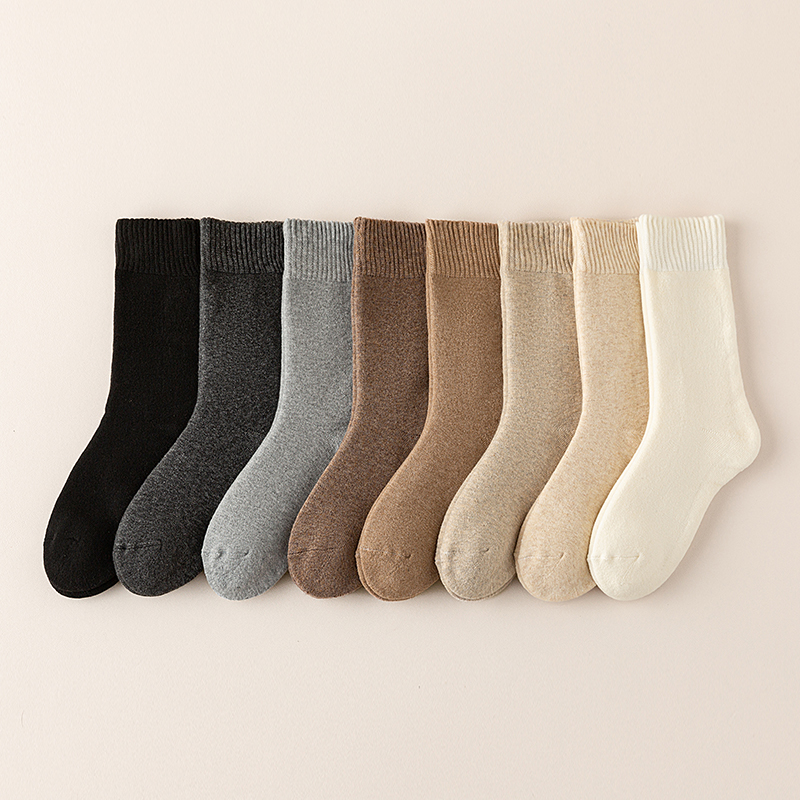 Merino Wool Thermal Socks for Cold BedroomsMade from insulating merino wool that stays warm even when slightly damp and rarely itches in fine knits, these solid wool socks are a strong all-around choice for cold-room sleep.View Product →
Finally, set expectations correctly: a night sock should feel barely there. If you are aware of it, it is either too tight, too thick, or the wrong temperature class for your room.
Worth doing tonight
- Take off the day's pair and give your feet ten minutes of open air
- Wash and dry your feet completely, including between the toes
- Keep two or three clean pairs designated only for sleeping
- Check that the cuff leaves no visible ring on the skin
Better skipped tonight
- Re-socking in the pair you wore all day
- Sleeping in socks that dent your ankle
- Overnight compression socks without a clinician's advice
- Thick synthetic pairs that trap sweat against the skin
Special Situations: Babies, Diabetes, and Feet That Need Extra Care
Most of this guide assumes healthy adult feet. The default advice shifts for several groups, and in some of them the shift is significant enough to matter every night.
Infants and toddlers
Babies are the one group where the default flips to "usually remove". Infants cannot kick off a cover when they get warm, overheating is a recognized risk factor in unsafe infant sleep, and tiny feet — while often cool to the touch — are unreliable indicators of core temperature. The back of the neck or the chest tells the truth. Dress the sleepwear and the room first: if a baby seems cold, add a layer of clothing or adjust the room temperature rather than defaulting to socks, which can slip off, bunch under the toes, or press a too-tight cuff into a chubby ankle. If socks are used, they should be loose cotton, straightened before the child settles, and removed once the child is warm.
Diabetes and reduced sensation
Reduced circulation and reduced sensation change the risk math overnight. A blister, a pressure mark or a damp patch that a healthy foot would shrug off can become a slow-healing wound when sensation is limited. Nightly routines matter here: inspect the feet each evening, including the soles and between the toes, keep the skin dry and intact, and never wear a tight cuff to bed. Non-binding medical styles with flat seams exist for exactly this reason, and they are worth having as dedicated night pairs rather than as daytime socks reused after work.
Raynaud's syndrome and chronically cold feet
People with Raynaud's experience spasms in the small vessels of the fingers and toes, usually triggered by cold or sudden temperature change. Keeping the feet gently warm at night with a loose, pre-warmed pair is a commonly recommended comfort strategy, and it fits the physiology: the goal is steady warmth, not heat trapped under a tight knit. Avoid anything that compresses, and keep a dedicated pair within reach of the bed so the warming happens before the attack, not after it starts.
Pregnancy and swelling
Late-pregnancy swelling makes sock cuffs bite earlier in the day, and the fluid that accumulates in the ankles settles further during the evening. Removing socks at night and elevating the feet slightly gives the circulation a chance to catch up. Compression wear during pregnancy should follow a clinician's guidance on both pressure class and wearing hours, which for most people excludes the overnight period.
Hot sleepers and night sweats
If your feet overheat, socks will work against you, and the answer is to remove them and warm the feet earlier instead — a footbath before bed does the vasodilation work without the overnight layer. Some clinicians also note that warming the feet briefly can, paradoxically, reduce hot flashes in menopausal sleepers by encouraging heat to distribute away from the core; individual experience varies, so test it over a week rather than deciding in one night. When a light layer is still wanted, choose the thinnest breathable knit you own.
A Five-Minute Nighttime Foot Routine
Consistency beats complexity. The routine below takes about five minutes, works with the physiology described above, and removes almost every common night-sock problem before it starts.
- Take off the day's socks as part of your wind-down, ideally thirty minutes before lights out, so the skin gets a real air break.
- Wash your feet with warm water and mild soap; skip very hot water, which dries the skin.
- Dry completely, especially between the toes, where moisture lingers longest and fungal trouble starts first.
- Spend ten unhurried minutes barefoot while you prepare for bed, letting trapped humidity escape.
- If you use foot cream, apply it now so it absorbs while you are still upright and the skin is clean.
- If the room is cold, step into a fresh, loose pair kept only for nights — never the pair from this morning.
- Do the two-second cuff check: one finger should slide under the elastic without a fight.
- Send damp or marked pairs to the laundry basket, not back to the drawer.
From the Factory Floor: What Separates a Real Night Sock From an Ordinary One
Our perspective on this topic is not theoretical. The factory behind this article started in December 2003 making single-use aviation socks — the pairs handed out on flights, where hygiene is the entire product. Building a sock whose only job is to be clean, light and harmless for a few hours forces habits that carry into everything we knit today, now at around 80,000 pairs per day, supported by a sister knitting facility with more than a decade of production experience.
When we engineer a sock that will plausibly be worn for eight unbroken hours — a thermal pair for a cold bedroom, a loose-top medical pair, a double-layer hiking knit — four construction details decide whether it earns its place at night:
- Cuff relaxation: elastic tension chosen so that eight hours of wear leaves no ring, verified on wear trials rather than guessed on a sample rack.
- Yarn selection: fine-count merino blends and combed cotton for night and thermal programs, because coarse fibers itch, and itch gets worse when feet are warm under a duvet.
- Toe closure: hand-linked or true-seamless closures, so nothing rubs the same toe for hours on end.
- Moisture path: terry or double-layer structures that move sweat off the skin instead of holding it against it until morning.
If you source socks for brands or retail programs, ask candidates the unglamorous questions: What elastic and cuff tension do you use for loose-top styles? What does the sock measure after twenty wash cycles at 40°C — shrinkage, elastic recovery, pilling? Can composition and test documentation travel with the shipment? A factory that answers those three questions with specifics has made night-appropriate socks before; one that answers with brochures has not. The difference shows up on the customer's ankle at 2 a.m., and it shows up again later in returns and reviews, where it gets expensive.
None of this requires exotic technology. It requires deciding, at the knitting and finishing stage, that the sock will be judged on how it behaves in hour six — and then testing for that instead of only for how it looks in packaging. That mindset is why the same production lines can turn out airport single-use pairs and thermal bed socks without changing the underlying standard: both are judged by what they do to the foot while it is stationary.
Frequently Asked Questions
Is it bad to sleep with socks on?
Not by itself. Healthy people can sleep in socks for years without harm when the pair is clean, dry and loose. Problems come from the exceptions: socks worn all day and then overnight, cuffs tight enough to leave marks, non-breathable fibers on sweaty feet, or medical conditions that make pressure and moisture riskier. If your feet look and feel normal in the morning, your current habit is working.
Why do my socks leave marks on my ankles, and should I worry?
Cuff elastic presses into skin that swells slightly during the day. A faint line that fades within half an hour is normal. Deeper dents that persist, numbness, tingling, or feet that stay cold are signs the cuff is too tight — switch to a larger size or a loose-top style, and if the signs continue without an obvious cause, mention them to a clinician.
Can I wear compression socks to bed?
Generally no, unless a clinician has prescribed overnight use for a specific condition. Compression is calibrated for upright hours, when gravity pulls fluid into the legs; lying flat already changes that balance, and added pressure overnight can be uncomfortable or counterproductive. Most people should take compression off at bedtime and let the skin breathe.
What socks are best for cold feet at night?
A clean, loose pair in fine merino wool or thermal cotton, sized so the cuff rests without biting. Warm the pair on a radiator for a minute first if your feet are very cold. Avoid tight ribs, heavy synthetic socks that trap sweat, and day-worn pairs, which start the night already damp.
Can babies and toddlers sleep with socks on?
The safer default is no. Overheating is the concern in infant sleep, and cool hands or feet are a poor measure of a baby's core warmth — check the chest or the back of the neck instead. Adjust sleepwear or room temperature first. If socks are used, they should be loose cotton, straightened so they do not bunch, and removed once the child is warm.
Does sleeping in socks help cracked heels?
It can. A common routine is to apply a urea- or petrolatum-based cream after washing, then wear clean breathable cotton socks overnight. The sock reduces friction against sheets and keeps the cream in contact with the skin for hours instead of letting it wipe off. The sock must be clean and loose; a tight or sweaty pair works against the repair.
How often should bedtime socks be washed?
After every wear, exactly like day socks. Night pairs sit against skin for eight hours and collect the same sweat and skin cells as any worn sock. Keeping two or three designated pairs and rotating them through the laundry keeps the habit effortless and the pairs dedicated.
My feet overheat the moment a sock goes on. What now?
Skip the socks and warm your feet differently: a ten-minute warm footbath before bed, a hot water bottle at the foot of the bed for the first half hour, or simply pointing your feet out from under the duvet once you are drowsy. If you still want a layer, choose the thinnest breathable knit you own rather than a thermal pair.



 Bahasa